

Welcome to Our Laboratory

Our research focuses on advancing next-generation photovoltaic technologies. In particular, We specialize in perovskite solar cells, large-area perovskite solar modules, and tandem solar cells. Beyond fundamental device development, We also explore practical applications of these technologies to enable commercialization and contribute to a sustainable energy future.

1.  Perovskite Solar Cells

그림1

Perovskite Solar Cells (PSCs) have attracted tremendous attention from researchers worldwide due to their remarkable properties, including a high absorption coefficient, excellent carrier mobility, long carrier diffusion length, tunable band gap, and low exciton binding energy. Since their first report with an efficiency of 3.8%, PVSCs have rapidly advanced to a certified 27% through solution processing. Recently, research has focused on further enhancing device performance and stability by improving perovskite film quality, engineering new compositions, and optimizing device architectures.

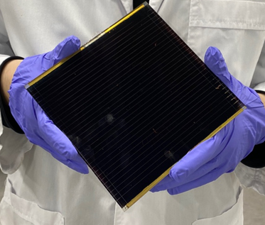
2.  Perovskite Solar Modules

Perovskite Solar Modules (PSMs) are regarded as a crucial step toward the commercialization of perovskite photovoltaics. While single cells have achieved remarkable efficiencies, scaling up to large-area modules poses significant challenges in film uniformity, interface engineering, and stability under real-world conditions. Through advances in deposition techniques, compositional engineering, and encapsulation strategies, certified efficiencies of perovskite modules have surpassed 20% on areas larger than 200 cm². Current research is dedicated to improving module durability, reducing hysteresis, and developing cost-effective fabrication methods to accelerate their pathway to industrial application.

3.  Tandem Solar Cells

그림4

Tandem Solar Cells (TSCs) represent one of the most promising strategies to surpass the efficiency limits of single-junction devices. By stacking a wide-bandgap perovskite absorber on top of a silicon or narrow-bandgap perovskite sub-cell, tandem architectures can more effectively harvest the solar spectrum. Certified power conversion efficiencies of perovskite/silicon tandems have already exceeded 33%, highlighting their potential for next-generation photovoltaics. Current research focuses on optimizing bandgap alignment, reducing interfacial recombination, and improving long-term operational stability to enable scalable manufacturing and commercial deployment.

Applications

그림3

Solar Cell Applications extend beyond traditional power generation and play an increasingly vital role in realizing a sustainable energy future. Perovskite and tandem technologies, with their high efficiency, lightweight nature, and compatibility with flexible substrates, enable diverse applications such as building-integrated photovoltaics (BIPV), vehicle-integrated photovoltaics (VIPV), and portable or wearable energy devices. These features allow solar energy to be embedded seamlessly into everyday life and infrastructure. Ongoing research is dedicated to enhancing device stability, scalability, and aesthetic integration, paving the way for widespread adoption in both residential and industrial markets.